
In today’s digital era, having a website is no longer optional for businesses — it has become a necessity. As technology continues to grow rapidly in 2026, customers now rely heavily on the internet to search for products, services, and information before making any purchasing decision. A business without a website risks losing credibility, visibility, and countless opportunities to grow.
A website acts as the digital identity of a business. Just like a physical store represents a business in the real world, a website represents it online. It provides customers with important information such as services, products, pricing, contact details, and customer reviews. In many cases, a website creates the first impression of a business. A professional and well-designed website builds trust and makes customers feel confident about choosing that business.
One of the biggest advantages of having a website is 24/7 availability. Unlike physical stores that operate only during specific hours, a website remains active all day and night. Customers can visit the website anytime, from anywhere, to learn about products or services and even make purchases. This convenience improves customer experience and increases sales opportunities.
Websites also help businesses reach a larger audience. A local shop may only attract people from nearby areas, but a website allows businesses to connect with customers worldwide. Through search engines like Google, businesses can attract visitors who are actively searching for related products or services. This increases visibility and helps businesses grow faster.
Another important benefit of a website is digital marketing. Modern marketing strategies such as social media advertising, SEO (Search Engine Optimization), email marketing, and Google Ads all work more effectively when connected to a website. Social media platforms may attract attention, but a website is where customers truly learn about the business and take action. It acts as the center of all online marketing activities.
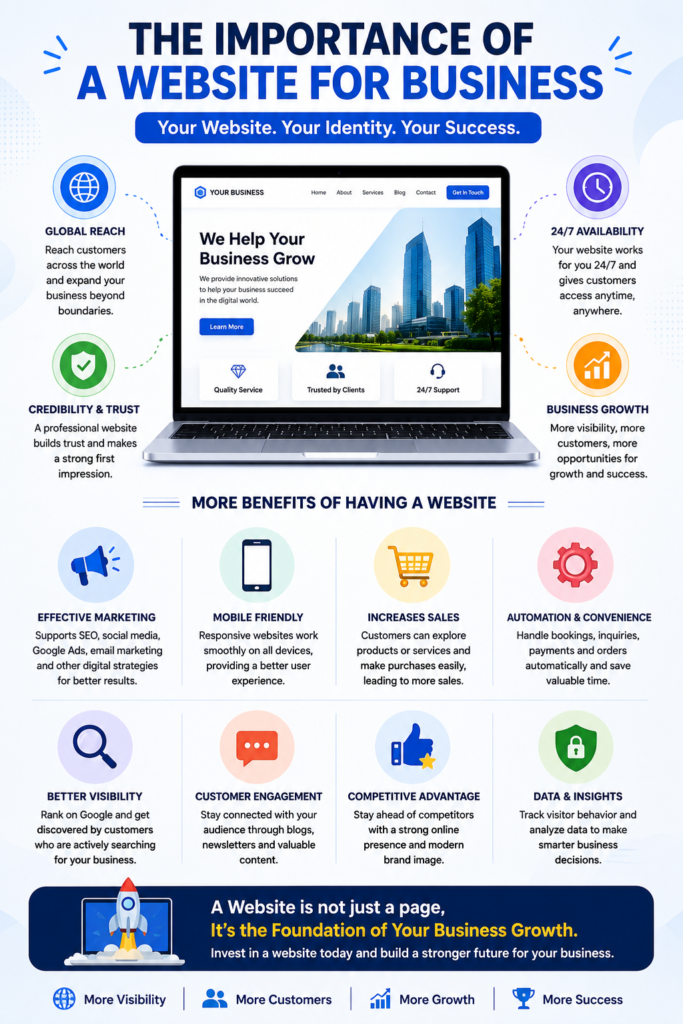
A website also improves professionalism and credibility. In 2026, customers expect every serious business to have an online presence. Businesses without websites often appear outdated or less trustworthy. A professional website with quality content, images, testimonials, and clear branding creates a strong impression and helps businesses stand out from competitors.
Another major advantage is automation and convenience. Websites can handle appointments, bookings, customer inquiries, payments, and orders automatically. This saves time for both businesses and customers. Instead of answering repetitive questions manually, businesses can provide instant information through their websites.
Mobile accessibility is another key reason websites are important today. Most internet users browse through smartphones, and modern websites are designed to work smoothly on mobile devices. This allows customers to access information quickly and easily, improving user experience and engagement.
In addition, websites help businesses build long-term relationships with customers. Through blogs, newsletters, updates, and valuable content, businesses can stay connected with their audience and build customer loyalty over time.
In conclusion, a website is one of the most powerful tools for business growth in 2026. It increases visibility, builds trust, improves customer experience, supports digital marketing, and creates new business opportunities. In a world where customers depend heavily on the internet, businesses with strong online presence will continue to grow and succeed. A website is not just a digital platform — it is the foundation of modern business success.