
Uncategorized
Pihu as a Digital Marketer in the Modern Online World
Digital marketing has transformed the way businesses connect with people. From social media campaigns to search engine optimization, brands now rely on digital strategies to grow online and reach the right audience. In this fast-changing industry, professionals like Pihu are building a strong presence by helping businesses improve visibility, engagement, and online growth. As a passionate digital marketer, Pihu focuses on combining creativity with strategy to create impactful digital experiences. Whether it is social media management, SEO, branding, or content marketing, the role of a modern digital marketer is more important than ever. Who is Pihu as a Digital Marketer? Pihu represents the new generation of digital marketers who understand both creativity and technology. The goal is not just to promote businesses but to build meaningful online connections that drive long-term growth.A digital marketer like Pihu works on: Social media marketing Search engine optimization (SEO) Content creation Website branding Lead generation Online advertising Audience engagementBy understanding market trends and consumer behavior, digital marketers help brands grow in competitive online spaces. Key Roles of Pihu in Digital Marketing 1. Search Engine Optimization (SEO) SEO helps websites rank higher on search engines like Google. A digital marketer focuses on: Keyword research On-page SEO Technical optimization Content optimization Link building The goal is to improve organic traffic and increase website visibility. 2. Social Media Management Social media is one of the strongest tools for branding today. Pihu helps brands create engaging content across platforms such as: Instagram Facebook LinkedIn Pinterest YouTube Strong social media strategies help businesses build trust and connect directly with customers. 3. Content Marketing Content is the foundation of digital marketing. Blogs, videos, captions, and website content help educate and attract audiences. A digital marketer creates: SEO-friendly blogs Marketing copy Social media captions Website content Promotional campaigns High-quality content improves both branding and search rankings. 4. Brand Building Every successful business needs a memorable brand identity. Pihu focuses on creating: Consistent visuals Clear messaging Professional online presence Audience-focused branding strategies Good branding helps businesses stand out in crowded markets. 5. Lead Generation & Growth Digital marketing is not only about visibility — it is also about conversions and growth. Strategies include: Paid advertising Landing page optimization Email marketing Funnel strategies Conversion optimization These methods help businesses turn visitors into customers. Skills That Make a Great Digital Marketer A successful digital marketer combines multiple skills, including: Creativity Communication SEO knowledge Social media expertise Analytical thinking Branding strategy Adaptability Pihu’s role as a digital marketer reflects the importance of staying updated with industry trends and digital innovations. Why Businesses Need Digital Marketers Modern businesses cannot rely only on traditional marketing methods anymore. Online competition is increasing every day, and digital presence has become essential. A professional digital marketer helps businesses: Reach targeted audiences Increase online engagement Build customer trust Improve website traffic Generate better sales opportunities This is why skilled digital marketers continue to play a major role in business growth. Future of Digital Marketing The future of digital marketing is driven by: Artificial intelligence Personalized marketing Video content Voice search optimization Automation tools Data-driven strategies Digital marketers who continuously learn and adapt will continue to grow successfully in the online industry. Final Thoughts The role of Pihu as a digital marketer represents creativity, strategy, and modern online growth. In today’s digital world, businesses need strong online visibility and meaningful customer engagement to succeed. From SEO and social media to branding and content marketing, digital marketers help brands grow and connect with the right audience. With consistent learning, innovation, and creativity, digital marketing continues to create endless opportunities for professionals and businesses alike. SEO Meta Title Role of Pihu as a Digital Marketer | SEO & Online Branding SEO Meta Description Discover the role of Pihu as a digital marketer and learn how SEO, branding, content marketing, and social media help businesses grow online.
Website
Importance of a Website!
In today’s digital era, having a website is no longer optional for businesses — it has become a necessity. As technology continues to grow rapidly in 2026, customers now rely heavily on the internet to search for products, services, and information before making any purchasing decision. A business without a website risks losing credibility, visibility, and countless opportunities to grow. A website acts as the digital identity of a business. Just like a physical store represents a business in the real world, a website represents it online. It provides customers with important information such as services, products, pricing, contact details, and customer reviews. In many cases, a website creates the first impression of a business. A professional and well-designed website builds trust and makes customers feel confident about choosing that business. One of the biggest advantages of having a website is 24/7 availability. Unlike physical stores that operate only during specific hours, a website remains active all day and night. Customers can visit the website anytime, from anywhere, to learn about products or services and even make purchases. This convenience improves customer experience and increases sales opportunities. Websites also help businesses reach a larger audience. A local shop may only attract people from nearby areas, but a website allows businesses to connect with customers worldwide. Through search engines like Google, businesses can attract visitors who are actively searching for related products or services. This increases visibility and helps businesses grow faster. Another important benefit of a website is digital marketing. Modern marketing strategies such as social media advertising, SEO (Search Engine Optimization), email marketing, and Google Ads all work more effectively when connected to a website. Social media platforms may attract attention, but a website is where customers truly learn about the business and take action. It acts as the center of all online marketing activities. A website also improves professionalism and credibility. In 2026, customers expect every serious business to have an online presence. Businesses without websites often appear outdated or less trustworthy. A professional website with quality content, images, testimonials, and clear branding creates a strong impression and helps businesses stand out from competitors. Another major advantage is automation and convenience. Websites can handle appointments, bookings, customer inquiries, payments, and orders automatically. This saves time for both businesses and customers. Instead of answering repetitive questions manually, businesses can provide instant information through their websites. Mobile accessibility is another key reason websites are important today. Most internet users browse through smartphones, and modern websites are designed to work smoothly on mobile devices. This allows customers to access information quickly and easily, improving user experience and engagement. In addition, websites help businesses build long-term relationships with customers. Through blogs, newsletters, updates, and valuable content, businesses can stay connected with their audience and build customer loyalty over time. In conclusion, a website is one of the most powerful tools for business growth in 2026. It increases visibility, builds trust, improves customer experience, supports digital marketing, and creates new business opportunities. In a world where customers depend heavily on the internet, businesses with strong online presence will continue to grow and succeed. A website is not just a digital platform — it is the foundation of modern business success.
SEO
What is SEO?
In today’s digital world, simply creating a website is not enough. Millions of websites exist on the internet, and businesses compete every day to attract customers online. This is where SEO becomes important. SEO, or Search Engine Optimization, is the process of improving a website so that it appears higher on search engines like Google, Bing, and Yahoo. In simple words, SEO helps people find your business online. Whenever someone searches for something on Google, such as “best café near me,” “yoga classes in Rishikesh,” or “website designer,” Google shows thousands of results. Most people only click on the first few websites they see. SEO helps your website appear in those top positions, increasing your visibility and attracting more visitors. SEO is extremely important for businesses in 2026 because customers now depend heavily on online searches before making decisions. Whether people want to buy products, book services, or learn information, they first search online. If your business does not appear in search results, potential customers may never discover you. One of the biggest benefits of SEO is organic traffic. Unlike paid advertisements, SEO brings visitors naturally to your website without paying for every click. This makes SEO a long-term and cost-effective marketing strategy. A well-optimized website can continue attracting visitors for months or even years. SEO also helps build trust and credibility. People often trust websites that appear at the top of Google because they believe these websites are more reliable and relevant. A good SEO strategy improves not only search rankings but also the overall quality of a website, making it faster, more user-friendly, and mobile responsive. There are three main types of SEO: On-Page SEO, Off-Page SEO, and Technical SEO. On-Page SEO focuses on optimizing the content of a website. This includes using the right keywords, writing quality blogs, creating attractive titles, adding images, and improving content readability. For example, if a business wants to rank for “best yoga retreat in Rishikesh,” it should naturally include those keywords in its website content. Off-Page SEO involves activities outside the website that improve reputation and authority. This mainly includes backlinks, which are links from other websites pointing to your website. The more trustworthy websites mention your business, the more search engines consider your website valuable. Technical SEO focuses on the backend performance of a website. It includes improving website speed, mobile compatibility, security, and proper website structure. In 2026, Google gives higher rankings to websites that load quickly and provide a smooth user experience. Another important aspect of SEO is local SEO. Local SEO helps businesses appear in searches related to specific locations. For example, when someone searches “best café in Rishikesh,” businesses with proper local SEO are more likely to appear in Google Maps and local search results. In conclusion, SEO is one of the most powerful digital marketing tools in 2026. It helps businesses increase visibility, attract customers, build credibility, and grow online without depending completely on paid advertising. A strong SEO strategy can turn a simple website into a powerful business tool that reaches people worldwide. In the modern digital era, businesses that invest in SEO are creating a stronger future for their growth and success.
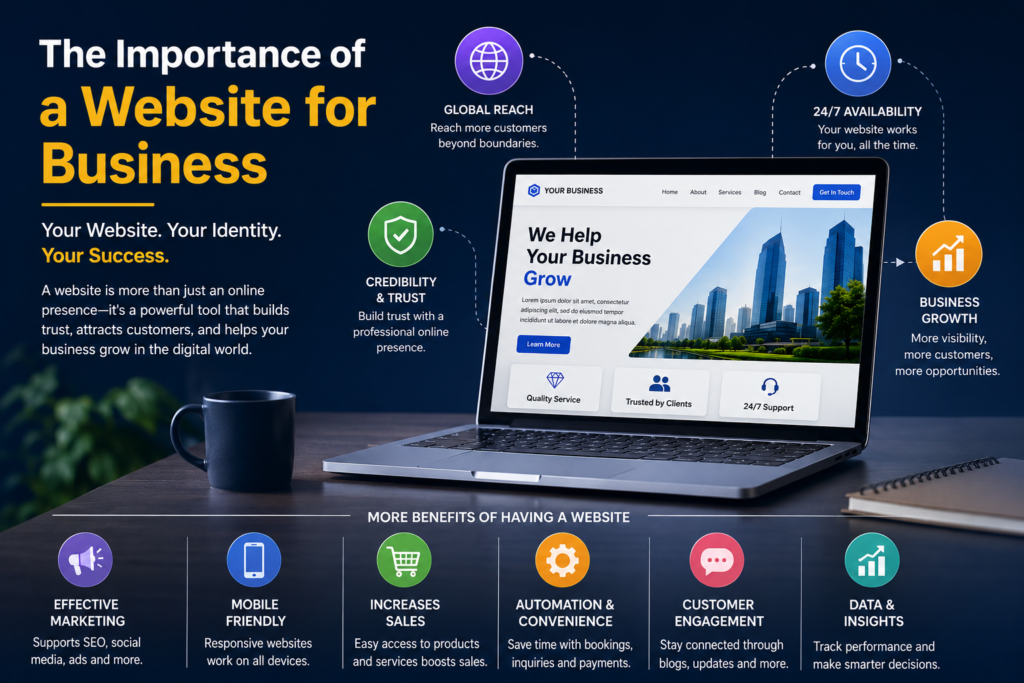
Importance of a Website for Business in 2026
In today’s digital world, a business without a website is like a shop without a signboard. As we move deeper into 2026, customers are spending more time online than ever before. Before buying a product, booking a service, or visiting a store, people first search on the internet. This is why having a professional website has become one of the most important investments for any business. A website acts as the digital face of a business. It helps customers understand who you are, what services you provide, and why they should choose you over competitors. Unlike traditional physical stores that operate for limited hours, a website works 24 hours a day, 7 days a week. Customers can visit anytime, browse products or services, contact the business, and even make purchases without any restrictions. This constant availability creates convenience for customers and increases opportunities for sales. One of the biggest advantages of a website in 2026 is credibility. Modern customers trust businesses that have a professional online presence. A website with clear information, customer reviews, photos, and contact details builds confidence and creates a positive first impression. Businesses without websites often appear less professional or outdated in comparison. Another major benefit is global reach. A physical shop is limited to a specific location, but a website allows businesses to reach customers from different cities, states, and even countries. Small businesses now have the ability to compete with larger brands because the internet creates equal opportunities for visibility and growth. Websites also play a key role in digital marketing. Social media platforms like Instagram and Facebook help attract attention, but a website is where visitors become customers. Businesses can run advertisements, publish blogs, improve search engine rankings, and collect customer inquiries directly through their websites. In addition, search engines like Google prioritize businesses with websites, helping them appear in local and global searches. In 2026, mobile usage continues to dominate internet activity. Most customers browse websites through smartphones, making mobile-friendly websites extremely important. A responsive website ensures that users can access information easily from any device, improving customer experience and engagement. Automation is another reason why websites are essential. Modern websites can handle bookings, appointments, online payments, customer support, and inquiries automatically. This reduces workload, saves time, and improves efficiency for businesses. Customers appreciate quick responses and smooth online experiences, which directly increases customer satisfaction. Furthermore, websites help businesses build their brand identity. Through design, content, images, and storytelling, businesses can communicate their vision and values to their audience. A well-designed website creates a memorable experience and strengthens brand recognition. The business landscape in 2026 is highly competitive and digitally driven. Customers expect businesses to be online, accessible, and informative. Without a website, businesses risk losing potential customers to competitors who have established a stronger digital presence. In conclusion, a website is no longer optional for businesses in 2026 — it is a necessity. It increases credibility, improves customer accessibility, supports marketing efforts, automates operations, and helps businesses grow beyond physical boundaries. Companies that invest in a strong online presence today are building the foundation for long-term success in the future.